
Custom Life-Size Robot Sculpture Commission: Costs, Timelines and Logistics
Commissioning a life-size metal robot is less an art purchase than a small logistics project. The sculpture is built freehand from salvaged steel over four to eight weeks, then ships in plug-in sections inside heat-treated timber crates. Catalogue figures around 2.6 metres sit roughly between €2,600 and €3,350 before freight. The expensive mistake is rarely the design. It is the delivery.
- Life-size figures of 2.5 to 2.7 metres sit in a published catalogue band. Monumental pieces above 4 metres are quoted individually.
- Fabrication runs four to eight weeks. Ocean freight and customs clearance sit on top of that.
- Multi-metre sculptures separate into plug-in sections, so no welding happens at your site.
- Mechanical offloading above roughly one tonne is the buyer's responsibility and needs to be agreed before you accept a quote.
- Reference images guide the build. Millimetre-exact replication is not what this medium produces.
What "custom commission" means when the material is salvaged steel
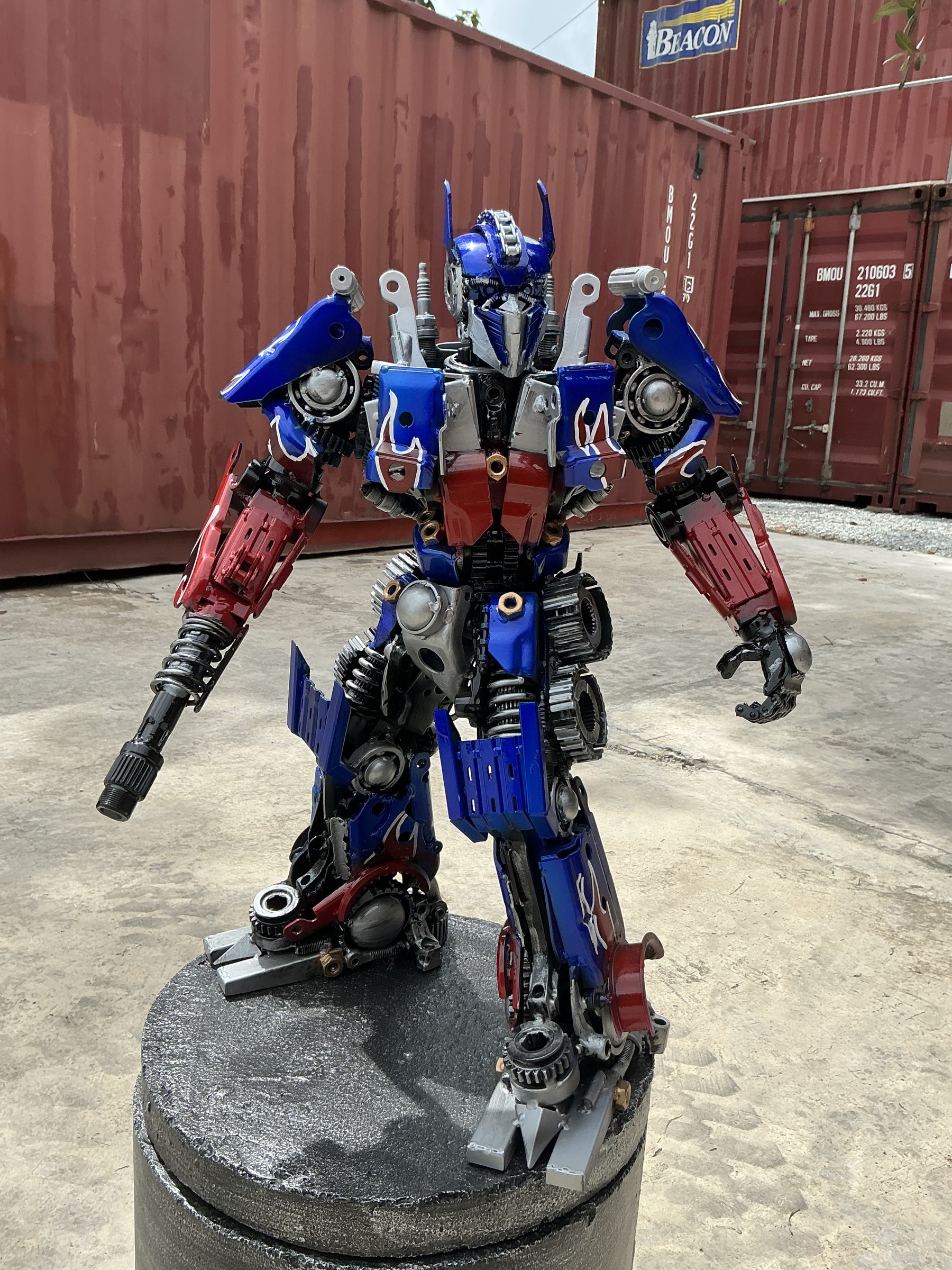
Set expectations before anything else. Big Robot Pattaya builds entirely from upcycled industrial steel: salvaged sheet plate, automotive components, motorcycle drive chains, sprockets and recycled vehicle tyres. No moulds. No cast series. You supply the references, and the yard interprets them in metal, part by part, on the floor of a working site at Nongprue on Sukhumvit Road in Pattaya.
That matters for what you get. Because every piece is fabricated by hand from whatever stock the character calls for, no two are identical. Surface texture, weld lines and the ghost of a sprocket or a chain link are the point, not a flaw to be smoothed out.
A buyer who needs a screen-accurate replica measured to the millimetre should commission a different medium. A buyer who wants a landmark object with obvious industrial character is in the right place.
The region helps here. Central and eastern Thailand, including Pattaya, Bangkok and Ang Thong province, has an established cluster of metal sculptors known internationally for pop-culture and sci-fi assembly work built from salvage automotive parts. The skills are concentrated, and so is the supply of raw material.
What you need to send to get a quote
The yard prepares a single all-inclusive quote covering fabrication, ISPM 15 wooden crating and shipping. A complete brief gets you an accurate number faster.
- Reference imagery. A photograph, a sketch, a character model or a rough concept.
- Required dimensions. Total height, plus the maximum width or footprint your space allows.
- Surface finish. Bare steel, clear lacquer, painted detail, or features such as illuminated eyes.
- Delivery address type. Commercial premises with a dock, an industrial unit, a residential driveway or a public space.
- Offloading capability. Whether you have a forklift or telehandler on site, or need the truck to do the lifting.
The last two are the ones buyers leave out, and they are the two that decide whether the final stage of the project goes smoothly. Treat them as part of the brief, not as paperwork to sort out later.
What it costs and why it costs that
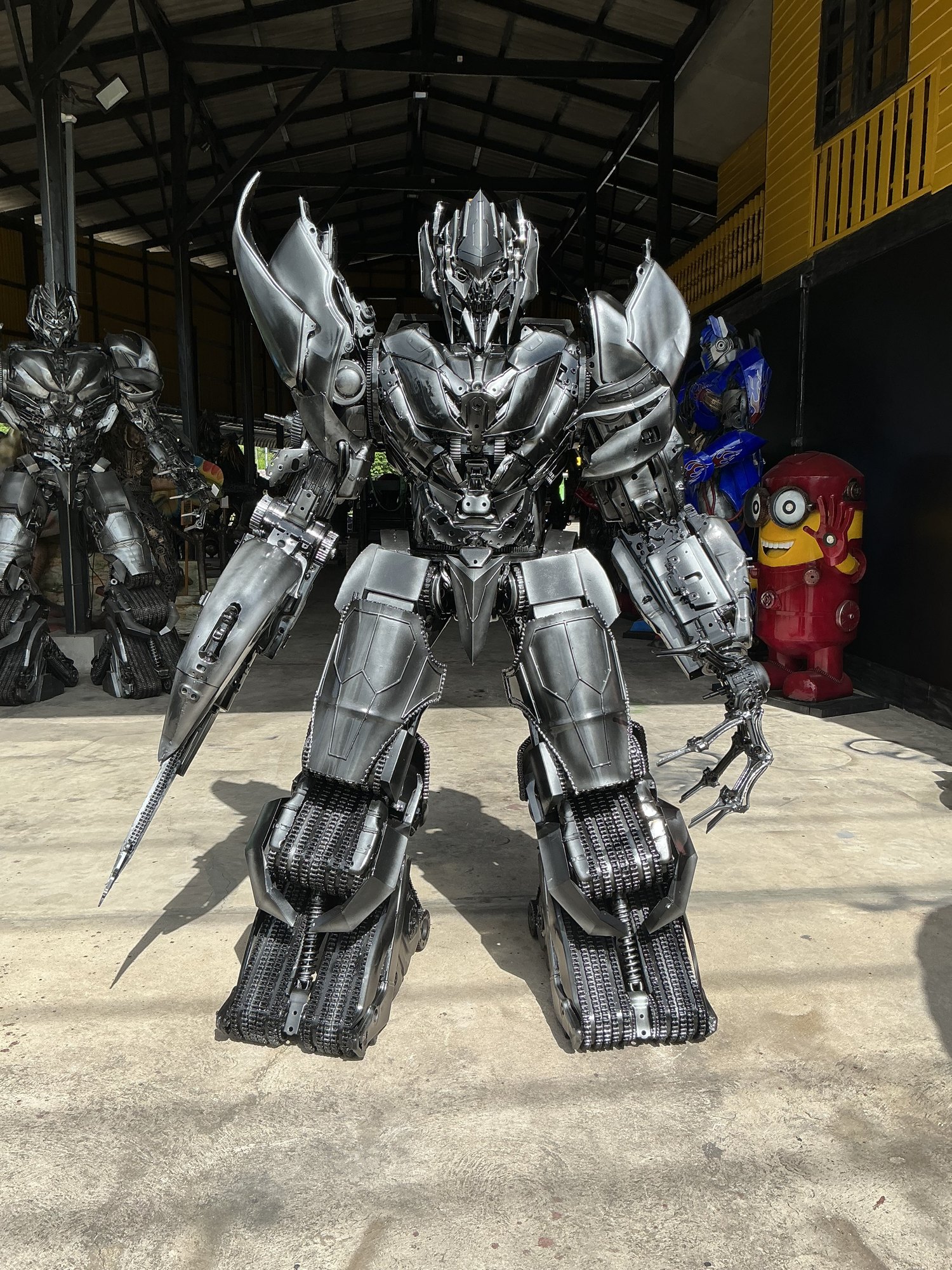
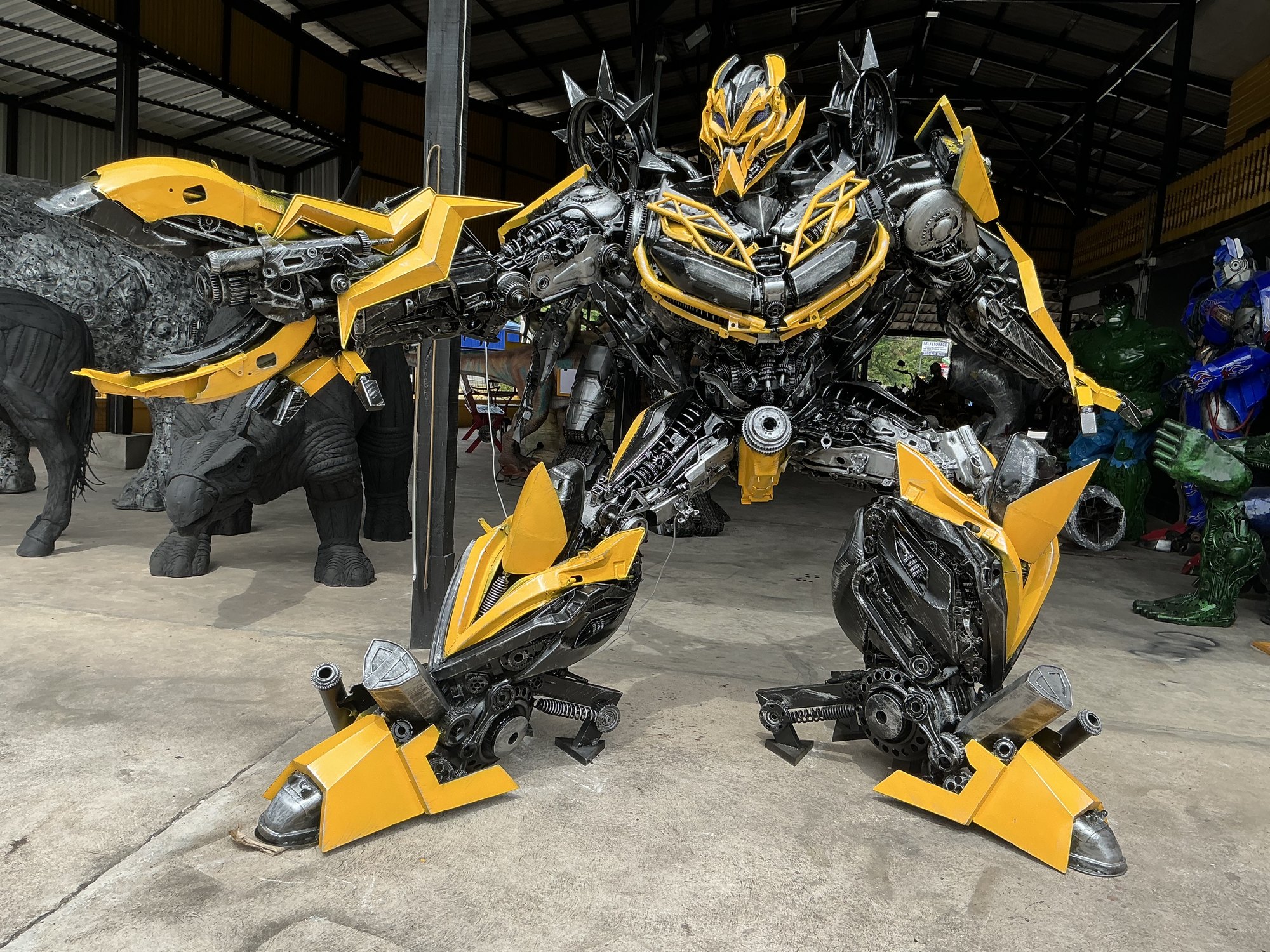
Published catalogue prices give a realistic anchor. Life-size figures such as Bumblebee and Optimus Prime, standing 260 to 270 centimetres, sit in the region of €2,649 to €3,333. Hulkbuster and comparable life-size movie characters at 250 to 260 centimetres fall into a similar band, roughly €2,649 to €3,320. Monumental figures from 400 centimetres upward are quoted individually on weight, steel volume and logistics.
Those numbers surprise buyers who have priced other mediums, so it is worth explaining where the saving comes from. Fiberglass needs a clay or foam master model, then negative moulds, before a single unit is cast. On a run of one, the commission absorbs all of that front-end tooling cost. Welded steel skips the step entirely. The sculpture is built directly from raw stock, which is why one-off custom work in this material stays within reach of a venue budget rather than a museum budget.
Two conditions matter. Catalogue prices cover the sculpture only and exclude freight and import tariffs. The quote the yard issues for a commission is all-inclusive of fabrication, crating and shipping, and it is held for seven days, because ocean freight spot rates move and a stale number helps nobody.
How long it takes, from first sketch to standing figure
Fabrication takes four to eight weeks depending on scale and complexity. That is the predictable part of the schedule.
After the metalwork comes crating, then the sea leg, then clearance at your port, then your own installation window. The yard controls the first stage and the packing. It does not control the shipping line or your customs authority, and transit times vary significantly by destination, so those are quoted per route rather than promised as a fixed figure. Big Robot Pattaya sets out the process in its guide to international shipping for scrap metal sculpture.
If you are building the sculpture into a launch, a refit or a season opening, plan the fabrication window tightly and leave the freight window generous.
How a three-metre steel robot gets through a standard doorway
It does not arrive in one piece. Multi-metre sculptures are engineered with plug-in sleeve joints, so arms, head, torso and any external weaponry separate for transport.
Each section is wrapped in stretch film and impact foam, strapped to a pallet and enclosed in ISPM 15 heat-treated timber crates. On arrival, reassembly is mechanical. The sections slot and lock together, and no welding is needed at your site. Once uncrated, individual components pass through normal commercial doors, which is what makes an indoor installation possible at all. The packing process is documented here.
Shipping, customs and the two words that must not appear on your paperwork
Ocean freight is the standard route. A single large figure usually ships as Less than Container Load, or LCL. Multi-piece installations go as a 20-foot or 40-foot Full Container Load. Payment is by international wire transfer against invoice.
Then the detail that causes genuine trouble. Customs declarations must describe the goods as sculpture or artwork. The phrase "scrap metal" should never appear on a bill of lading or commercial invoice. Scrap metal is treated in many jurisdictions as restricted or hazardous industrial waste, and the wrong wording can trigger an environmental import block or a waste tariff on an object that is, in fact, original art.
Original artwork is classified under HS Code Chapter 97. Classification and duty treatment differ by country, so confirm the correct code and any exemptions with your own customs broker before the container sails. This is general guidance, not customs advice.
The pre-commission site checklist
Run this before you accept a quote, not after the shipment notification lands.
| Requirement | What to check |
|---|---|
| Ground bearing capacity | Confirm the floor, deck or ground can carry the assembled weight at the intended spot. |
| Anchoring provision | Plan bolt-down points for outdoor sites and any public-access commercial venue. |
| Offloading machinery | Liftgate trucks typically handle up to around 1,000 kg. Above that you need a forklift, telehandler or crane on site at delivery. Confirm the exact limit with your freight provider, as it varies by carrier and country. |
| Access route | Measure every corridor, doorway and turn between the unloading point and the final position. |
| Freight coordination | Residential kerbside delivery without a dock or forklift needs special arrangement at quotation stage. |
Most stranded crates come down to one of these five lines being skipped.
Living with welded steel outdoors
Welded salvage steel is vandal-resistant, wind-tolerant and heavy enough for high-traffic environments. That is precisely why commercial operators pick it over fiberglass for forecourts, entrances and public areas.
The trade-off is corrosion. Bare exposed steel will oxidise under rain and salt spray, and coastal or humid sites accelerate it. Outdoor installations need a clear lacquer or rust inhibitor applied on a repeating schedule, which is a maintenance line item rather than a one-off job. Indoors, the demand is far lower.
Decide early whether you want a sealed finish held close to delivery condition or a weathered patina you let develop. Both are legitimate. Only one requires ongoing work. The comparison of scrap metal and fiberglass for commercial statues covers the durability trade-off in more detail.
Original concepts, mascots and the licensing question
Pop-culture characters dominate inbound requests, and the catalogue reflects that. Buyers planning a public or commercial installation of a trademarked character should know that copyright and trademark enforcement is active in Western markets, and the exposure sits with whoever displays the piece, not with the fabricator. Take your own legal view before you commit to a licensed character in a customer-facing space.
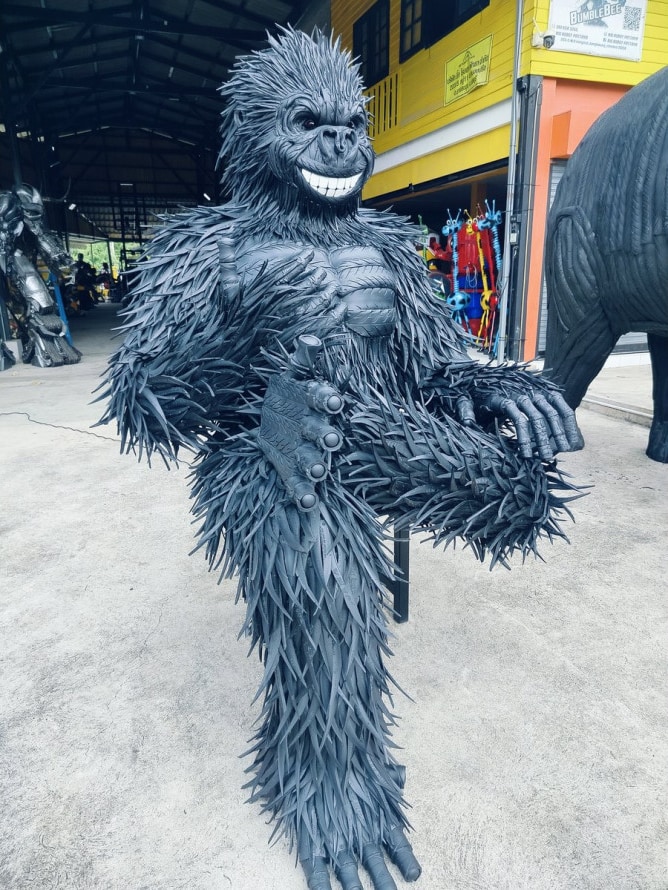
There is a more interesting route anyway. An original robot concept, a corporate mascot rendered in steel or a generic sci-fi mech gives you something no competitor can order from a catalogue. The same technique extends well beyond robots, from tyre gorillas to spark-plug creatures to custom chopper sculptures.
Commissioning is how you end up with the only one in existence. That is usually the reason a venue buyer started looking.
How to start a commission
Gather your reference images, measure the space including the route in, and write down your site access and offloading situation. Send those details to the yard. You will get back an all-inclusive quote covering fabrication, ISPM 15 crating and shipping, valid for seven days.
If you are in Thailand, the yard is a real working site on Sukhumvit Road at Nongprue, Pattaya, and you can see the scale of the work in person before you order.
Frequently asked questions
Can you build from my own sketch or a character I designed? Yes. A photograph, sketch, 3D model or concept drawing all work as references for an original piece.
What is the largest sculpture you can make? Up to 9 metres tall and around 8 metric tons. Pieces at that scale are quoted individually on steel volume, engineering and logistics.
Do I need a welder or technician to assemble it? No. Large sculptures use plug-in sleeve joints that lock together mechanically on site.
Does the quoted price include shipping? A commission quote is all-inclusive of fabrication, ISPM 15 crating and shipping. Import duty and local taxes at your end are separate and depend on your country.
What happens if my quote expires? Request a fresh one. The seven-day hold exists because ocean freight spot rates move, so the shipping element is the part most likely to change.
Will it rust? Outdoors, yes, if the steel is left bare. Rain and salt spray will oxidise exposed metal. Outdoor pieces need a clear lacquer or rust inhibitor reapplied periodically.